Early History
Little is known about W. Sahara until the 4th century BC, when trade with Europe began. During the middle ages it was occupied first by Berbers and then by the Arabic speaking Muslim Bedouins. Portuguese navigators reached Cape Bojdor on the northern coast of present day W. Sahara in 1434. However, there was little European contact with the region until the 19th century.
In the 19th century the Spanish laid claim to the southern coastal region, called Rio de Oro, and later occupied the northern interior region, Saguia el Hamra in 1934. The Spanish formally united the two regions, and it became known as Spanish Sahara in 1958. Both Morocco and Mauritania sought to control the territory and when the Spanish departed in 1976, they divided the territory between them.
In the meantime the indigenous Saharawis began fighting for independence. In 1976 the insurgents called the Polisario front, declared a government-in-exile (the Saharawi Arab Democratic Republic) from their base in Algeria. Mauritania reached a peace agreement with the Polisario in 1979, but Morocco then seized the land given up by Mauritania and now exerts administrative control over the entire region. The Frente Polisario fought Morocco to a stalemate and agreed in Sept 1991 to a cease fire, which was contingent on a referendum regarding independence.
The Timeline
Spain colonises the territory according to Berlin conference, which divided up Africa between the colonial powers.
War between the Saharawi population and Spanish colonial power begins.
The Saharawi resistance is defeated by France after 28 years of continuous war.
Morocco starts claiming territory.
The Saharawi population begins exploiting rich phosphate deposits also first political Saharawi movement is formed.
June the 17th, new political movement is banned.
POLISARIO (the Saharawi liberation movement) is formed. Morocco starts officially claiming the territory to the north and Mauritania to the south.
A census of the western saharan population is undertaken (eligibility for vote) in preparation for a referendum to be organized by UN.
December - UN general assembly asked the International court of Justice to look into the dispute.
UN officially names the territory in dispute as the Western Sahara.
October 16 - The International court of justice announced that neither Morocco nor Mauritania should have sovereignty over the Western Sahara.
October 16 - Morocco started a "Green March" of 350,000 people as a means of advancing their army into W. Sahara.
October 31 - Moroccan forces enter the north west of the territory.
On November 6 The Green March crossed the border. Mauritania, Morocco and Spain meet secretly in Madrid and on the 14 November sign the Madrid Accord which divide the territory into two; the northern 2/3 to Morocco and the southern 1/3 to Mauritania. Spain and Morocco agrees on exclusive right to exploit the phosphate deposits.
February 26 - The Spanish colonial mandate ends.
February 27 - The POLISARIO forms the Saharawi Arab Democratic Republic (SADR)
Mauritania abandons its territorial claims in the south and recognizes the rights of the Saharawi People by signing a peace accord.
Cease fire between POLISARIO and Morocco.
A settlement plan, to be administered by UN peacekeeping force MINURSO is set up by UN. MINURSO is mandated to organise a poll asking the population of the Western Sahara whether they would prefer to be integrated into Morocco officially or to be independent.
One month before the beginning of the settlement plan implementation, Morocco begins a series of violations against the cease fire with POLISARIO that began in 1989. Morocco also denies MINURSO free movement through occupied Western Sahara and submits an application on behalf of 120,000 of its citizens to take part in the poll. Morocco also moves thousands of new settlers into the region.
To this day a deadlock remains on who is eligible to vote.
Historical Sites
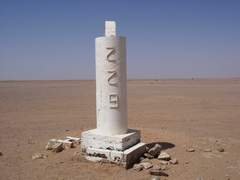
Border Area
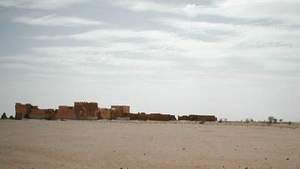
Fort Bentili - Ancient Spanish fort
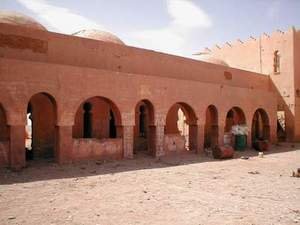
Interior of the Fort
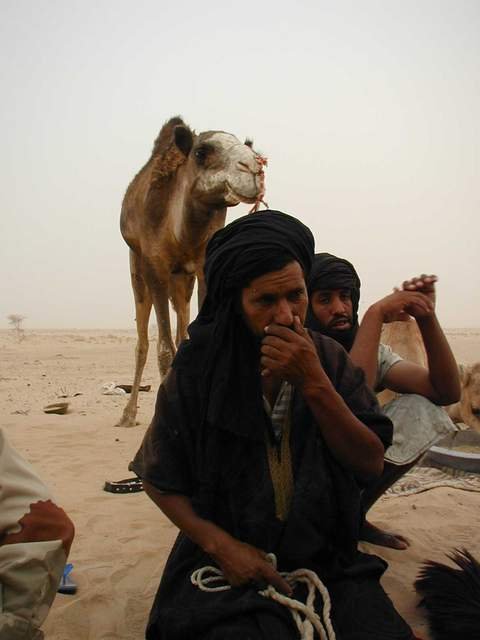
Man with Camel
Historical Site